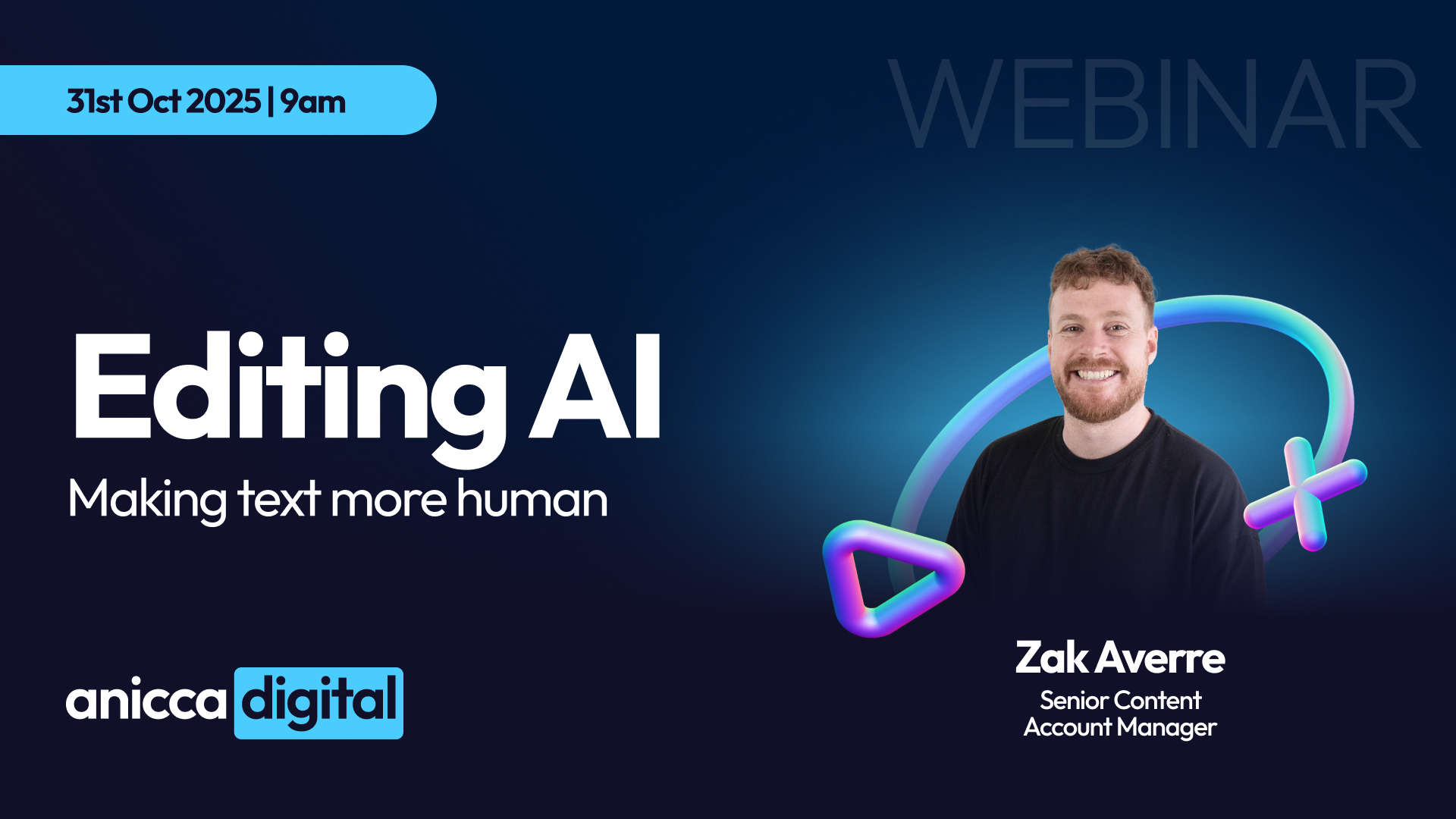
Making AI Content Sound Human – Webinar Recap
AI writing tools have revolutionised content creation, but there’s a problem most marketers miss: AI doesn’t actually write—it predicts. In Zak’s recent webinar, “Editing AI: Making ChatGPT More Human,” Zak Averre, Senior Content Account Manager at Anicca Digital, explained why this distinction matters for creating content that genuinely connects with audiences.
The Truth About AI Writing
AI tools like ChatGPT use probability and pattern recognition rather than true understanding. They analyse vast databases to predict the most likely next word resulting in ,sophisticated maths, not creative thinking.
This creates predictable problems: robotic tone, repetitive phrases, and content that lacks conviction. Research from Grammarly reveals AI-generated academic writing now overuses phrases like “delve into” more frequently than “pandemic” appeared during COVID-19. That’s a red flag for formulaic content.
The Hidden Costs of AI Content
In the webinar, Zak also demonstrated how AI’s probability-based approach creates critical weaknesses. AI tools deliberately avoid strong statements, using qualifiers like “typically” and “broadly” to stay neutral. This produces grey, unconvincing content that fails to engage readers.
Sample AI text tested through the Hemingway App scored six grade levels above the recommended reading level for online content. Without specific prompting, AI defaults to obvious choices and tired tropes, missing opportunities to showcase genuine expertise.
Perhaps most concerning? A McKinsey survey found only 27% of people believe all AI-generated workplace content is reviewed by humans. That means vast amounts of unvetted, potentially problematic content are being published daily.
Practical Solutions That Work
However, this isn’t all bad. Zak shared actionable techniques for transforming AI from a limitation to a powerful tool. The key lies in sophisticated prompting and careful editing.
Zero-shot prompts work for simple queries but need extensive context—target audience, purpose, location, and background—to generate genuinely useful content.
Few-shot prompts let you refine output iteratively, adjusting tone and structure before committing to larger pieces. This ensures AI understands your requirements properly.
Temperature settings control AI creativity from formal (0.0) to highly creative (1.0). Zak recommends generating multiple versions at different temperatures and combining the best elements—introducing natural variation and preventing robotic-sounding prose.
Most importantly, Zak emphasised the “human sandwich” approach: human creativity at the beginning, AI assistance in the middle, and human editing at the end. AI excels at research, data processing, and repurposing existing content, but humans must provide unique perspectives, verify accuracy, and inject personality.
Why This Matters for Your Business
At Anicca Digital, we’ve perfected the balance between AI efficiency and human creativity. Our award-winning, data-driven approach combines technical expertise with genuine content craftsmanship, ensuring your brand voice remains authentic whilst maximising productivity.
The webinar covers far more than this summary captures—including specific editing techniques, avoiding content truncation, and maintaining brand consistency. Zak walks through real examples, showing exactly where AI falls short and how to fix it.
Ready to master AI content creation? Watch the full webinar to discover techniques that will transform your content strategy.
Want expert help implementing these strategies? Anicca’s multi-channel services combine paid advertising, organic search, design, and content marketing to meet your unique business needs. Contact us today to learn how our team can help you create content that’s both efficient and genuinely human.