AI-Powered Search, PPC Innovations, and the Evolving SEO Landscape: Key Updates for Search Marketers
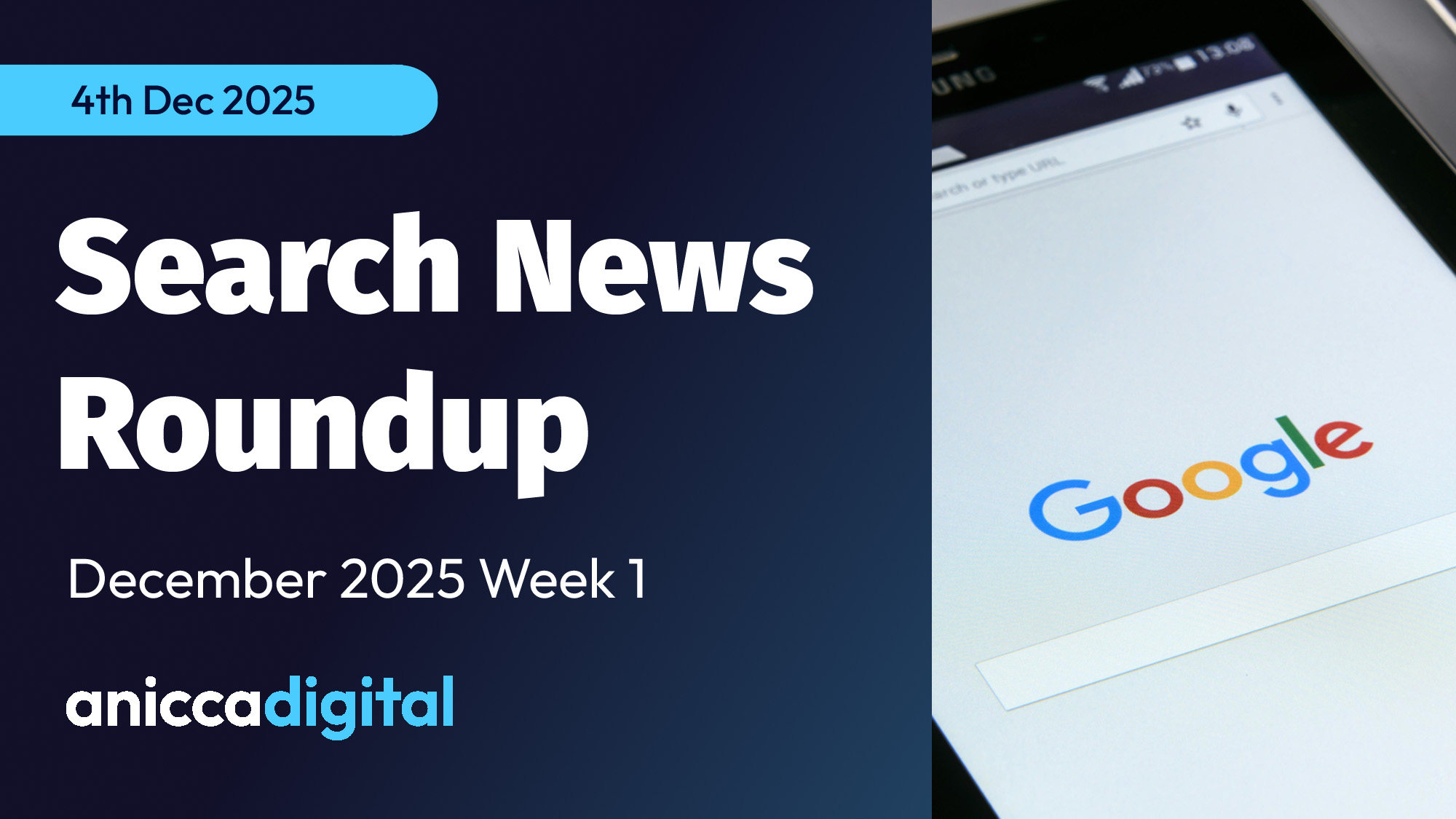
The search marketing world is shifting faster than ever. Google’s Gemini 3 rollout, new AI-powered ad tools, and the rise of conversational search experiences are changing how users find information online and how brands need to think about visibility. Add in emerging research on AI citations, concerns about publisher revenue, and new black hat tactics like AI poisoning, and it’s clear that marketers need to stay sharp and adaptable.
For agencies and in-house teams alike, the message is straightforward: get comfortable with AI-driven discovery, make the most of new PPC features, and start measuring success across multiple channels rather than obsessing over a single metric.
Gemini 3 now used for some queries in AI Mode
Google has started using Gemini 3 for certain queries within AI Mode, and this marks a genuine step forward for how search results look and feel. Initially available to AI Pro and Ultra subscribers in the US, Gemini 3 delivers richer, more visual AI-generated answers. We’re talking image-heavy results, dynamic layouts, and even embedded tools like simulators and calculators appearing directly in responses.
What does this mean for SEO? Content now needs to work for both traditional rankings and AI discovery. If you want your brand to appear in these AI-generated answers, your information needs to be authoritative, well-structured, and easy for AI systems to extract and cite. The days of optimising purely for blue links are fading.
From a practical standpoint, teams should be monitoring visibility across both AI Mode and traditional AI Overviews. If Gemini 3 is routing more complex queries through its system, then brands that invest in technical SEO and structured content will have an advantage. This isn’t something to address later; it’s happening now.
Google Ads’ Nano Banana Pro AI get rigorously tested
Google’s Nano Banana Pro AI image tool is getting serious testing across different industries, and the results are mixed but promising. The tool is brilliant for generating quick creative variations, adjusting things like mood, lighting, and materials on the fly. If you’re running Performance Max or Display campaigns and need a high volume of assets, this can genuinely speed things up.
That said, it’s not perfect. Brand restrictions can be limiting, there are occasional demographic biases in outputs, and sometimes the images just look a bit off. You’re not going to replace a professional designer with this tool, especially in regulated industries where brand consistency matters.
The takeaway? Use Nano Banana Pro as a creative accelerator for ideation and testing, but keep human oversight in place. Check every output against your brand guidelines before anything goes live. Efficiency is great, but not at the cost of your brand looking inconsistent or, worse, inappropriate.
Google Ads overview tab now supports custom views
This one’s genuinely useful for anyone managing multiple accounts. Google Ads now lets you create up to five custom Overview tab views, each tailored to the metrics and reports that actually matter for your workflow.
For PPC managers, this means less time clicking through different reports and more time spotting trends and making decisions. You can set up views specific to different clients or campaign types, making it much easier to jump into an account and immediately see what’s relevant.
It’s a small feature in the grand scheme of things, but these quality-of-life improvements add up. Better organised data means faster optimisation cycles and clearer reporting to clients or stakeholders.
Google expands custom segments for restricted Display Campaigns
Google has updated its Personalised Ads policy to give advertisers more access to Custom Segments for Display campaigns that were previously restricted. This is particularly relevant if you’re working in sensitive verticals like health-related services, where targeting options have historically been limited.
On one hand, this could unlock better audience segmentation and improved campaign performance. On the other hand, there are valid questions about privacy, compliance, and whether this level of targeting is appropriate for certain products or services.
If you’re managing campaigns in affected verticals, now’s the time to review what’s changed and brief your clients accordingly. Balance the benefits of expanded targeting with user comfort and brand safety. Just because you can target more precisely doesn’t always mean you should.
Google Ads search terms report: 5 tips for better results
The search terms report remains one of the most valuable tools in PPC, and recent guidance highlights five ways to get more out of it: understanding the difference between keywords and search terms, using match types effectively, customising reports for DSA and AI Max campaigns, digging into “Other Search Terms” for hidden insights, and correlating search terms with their triggering keywords.
This isn’t just about negative keyword management. The search terms report gives you a window into what users are actually searching for and how well your campaigns align with that intent. Regular audits, proper match type usage, and promoting high-performing terms to dedicated keywords can make a real difference to efficiency and ROI.
For teams managing PPC campaigns, embedding these practices into your regular workflow helps build a culture of continuous improvement. It also makes client reporting more transparent, showing exactly how budget is being spent and what’s driving results.
Beyond SERP visibility: 7 success criteria for organic search in 2026
Traditional rankings are no longer the whole story. A recent analysis outlines seven criteria that will matter for organic search success in 2026: visitor quality, SERP diversification, trendspotting, traffic diversification, brand reputation, paid media synergy, and combined search performance.
The reality is that discovery now happens across AI Overviews, social platforms, video, forums, and more. Focusing purely on keyword positions misses the bigger picture. Are you attracting the right visitors? Is your brand showing up where your audience spends time? Are you tracking performance across channels rather than in isolation?
This shift requires broader thinking about what success looks like. It’s less about chasing rankings and more about building a presence that drives actual business outcomes. That means working across SEO, paid media, and content in a joined-up way rather than treating them as separate silos.
How AI answers are disrupting publisher revenue and advertising
AI-generated answers from platforms like ChatGPT, Gemini, and Perplexity are creating real challenges for publishers who depend on advertising and affiliate revenue. When AI provides answers directly, users don’t click through to websites. Some publishers have reported significant drops in click-through rates as a result.
For marketers and agencies, this shift means rethinking how content works. Building direct relationships with your audience becomes more important when you can’t rely on search traffic in the same way. Diversifying traffic sources, exploring subscription models, and adapting content for AI-driven environments are all on the table.
It’s worth watching how this develops. The relationship between AI platforms and publishers is still being negotiated, and new advertising formats within AI experiences may create opportunities as well as challenges.
AI KPIs: Turning mentions into strategy in the age of LLMs
The rise of large language models is changing what visibility actually means. Traditional metrics like impressions and clicks don’t capture whether your brand is being mentioned in AI-generated responses, and that matters increasingly.
New metrics to consider include how often your brand gets mentioned in AI answers, the sentiment of those mentions, your share of voice compared to competitors, and whether AI systems are citing your content as a source. These indicators give a more nuanced picture of brand presence in AI-powered environments.
For marketers, tracking these KPIs can reveal visibility gaps you wouldn’t spot through traditional analytics. It’s still early days for this kind of measurement, but getting ahead of it now means you’ll be better positioned as AI-driven discovery becomes more dominant.
November 2025 SEO & AI Search Industry News: Gemini 3, Perplexity Updates, New GSC Tools, & More
The past month has seen plenty of movement across the search industry. Gemini 3 launched and started appearing in Google’s AI Mode. Ads began showing within AI Mode results. Google Search Console added new tools for branded query filtering and custom annotations. Perplexity launched its Comet browser and announced a deal to power AI search within Snapchat’s “My AI” chatbot.
All of this points to a search landscape where AI integration is accelerating across multiple platforms. Visibility increasingly depends on optimising for AI-driven discovery, not just traditional search engines. Staying current with these developments is essential for maintaining competitive advantage.
Do AI Assistants Link When Mentioning Brands? For Ahrefs, Only 28% of the Time
A recent Ahrefs study found that AI assistants like ChatGPT and Gemini only link to brand websites about 28% of the time when mentioning them in responses. Brand mentions are valuable for awareness, but they don’t always translate into actual website visits.
The study also noted that linked mentions tend to appear on higher-traffic queries, so actual exposure may be greater than raw numbers suggest. For brands, this highlights the importance of optimising for both mentions and links within AI environments. Authoritative content, proper schema markup, and strong site structure can all help.
Set realistic expectations about traffic from AI platforms, but don’t ignore them. Being mentioned matters for brand recognition even when it doesn’t immediately drive clicks.
The ChatGPT Traffic Playbook: How to Track, Measure, and Grow
Ahrefs has published a detailed guide on tracking and growing website visits from ChatGPT. The advice covers identifying AI-driven referral traffic through server logs and analytics, and optimising content to increase visibility within AI responses.
Interestingly, ChatGPT traffic often shows higher intent and better conversion rates than traditional search traffic, even though volumes are currently lower. There’s also less competition for AI visibility right now, so brands that move early can build a presence before the space becomes crowded.
For agencies, this is worth discussing with clients. Understanding AI traffic patterns and setting up proper tracking provides useful insight into how this channel develops over time.
How to optimise for ChatGPT: LLMs.txt doesn’t matter but brand mentions on Quora and Reddit do
SE Ranking’s research suggests that LLMs.txt files have minimal impact on whether ChatGPT cites your brand. What does make a difference? Brand mentions on platforms like Quora and Reddit. AI systems seem to prioritise brands that get discussed frequently in community-driven forums.
This finding shifts the focus from technical files to building genuine brand authority across the web. Encouraging participation in relevant conversations, creating content that gets shared and discussed, and monitoring AI citations for brand mentions are all practical steps.
For brands, this underscores the value of community engagement alongside traditional SEO. Visibility in AI-powered search increasingly depends on being part of broader conversations online.
Google Connects AI Overviews To AI Mode On Mobile
Google is testing a feature that connects AI Overviews to AI Mode on mobile devices. Users can tap “Show more” in an AI Overview to enter AI Mode for follow-up questions and deeper exploration, all without leaving the search results.
This integration signals a move toward more conversational, interactive search experiences. Content needs to work for both quick summaries and extended engagement. If users are staying within AI-powered interfaces for longer, brands need to ensure their information supports that kind of exploration.
For SEO teams, this means thinking about how content performs across multiple formats. Technical structure, clear organisation, and comprehensive information all help ensure visibility as search journeys become more fluid.
AI Poisoning: Black Hat SEO Is Back
AI poisoning is emerging as a genuine threat to search integrity. Malicious actors are manipulating AI training data and prompt inputs to influence what AI systems generate, potentially spreading misinformation or damaging brand reputations. Research suggests that poisoning a large language model may require surprisingly few malicious documents.
For brand managers, this means monitoring what AI systems say about your brand and being prepared to respond if something looks wrong. Testing brand-relevant prompts across different AI platforms, tracking traffic from LLM citations, and reporting harmful content are all sensible precautions.
This isn’t something to panic about, but it’s worth having processes in place. As AI becomes more influential in shaping perceptions, protecting brand reputation in these environments matters.
Bing Shows What Signals Matter For AI Search Visibility
Bing has shared insights into what drives visibility in AI-powered search results. The signals that matter are largely familiar: content quality, authority, and structured data. AI systems prioritise trustworthy sources, comprehensive information, and clear topical relevance.
Bing also notes that the research phase of consumer journeys is increasingly happening within conversational AI search rather than traditional results pages. This shifts focus from clicks to upstream engagement, when users are still exploring options.
For SEO professionals, the practical takeaway is that solid fundamentals still matter. Authoritative content, proper schema markup, up-to-date information, and strong E-E-A-T signals all contribute to AI visibility. The measurement focus just needs to expand beyond clicks to include impressions and placements in AI answers.
Google’s Mueller Says Sites In A ‘Bad State’ May Need To Start Over
Google’s John Mueller recently advised that websites in severely degraded condition might benefit more from starting fresh than trying to fix accumulated problems incrementally. This applies particularly to sites with historical penalties, systemic quality issues, or major technical debt.
For agencies working with legacy sites, this is worth considering during audits. Sometimes the fastest path to recovery is a clean rebuild with proper foundations rather than trying to patch something fundamentally broken.
This doesn’t mean every struggling site needs rebuilding, but it’s a reminder that quality and purpose remain foundational. If a site has drifted too far from best practices, incremental fixes may never get it where it needs to be.
New Data Reveals The Top 20 Factors Influencing ChatGPT Citations
A major study analysing over 129,000 domains has identified key factors that influence whether ChatGPT cites a website. The most predictive include referring domains, domain trust scores, traffic levels, and content depth. Brand mentions on authoritative platforms like Wikipedia and Reddit also correlate strongly with AI citations.
For SEO practitioners, this reinforces that solid fundamentals matter. Building authoritative backlinks, maintaining comprehensive and up-to-date content, implementing structured data, and ensuring strong technical performance all contribute. Interestingly, FAQ schema and LLMs.txt files had minimal impact.
The takeaway is that there’s no special trick for AI optimisation. Doing SEO well, building genuine authority, and engaging with communities online all contribute to visibility in AI-powered environments.
Strategic Directions: Navigating the AI-Driven Future of Search Marketing
The convergence of AI, search, and digital advertising is reshaping how marketers need to think about visibility and performance. Success increasingly depends on a holistic approach that prioritises authority, technical excellence, and adaptability.
Brands need to optimise for AI-driven discovery while continuing to build presence across traditional channels. Community engagement, content freshness, and robust technical SEO are essential for maintaining relevance as traditional rankings become just one part of a larger picture.
For agencies and senior marketers, the priority is staying agile. Embrace new tools and measurement approaches, invest in brand-building across channels, and keep learning as the landscape continues to evolve. The brands that adapt quickly will be the ones that thrive.